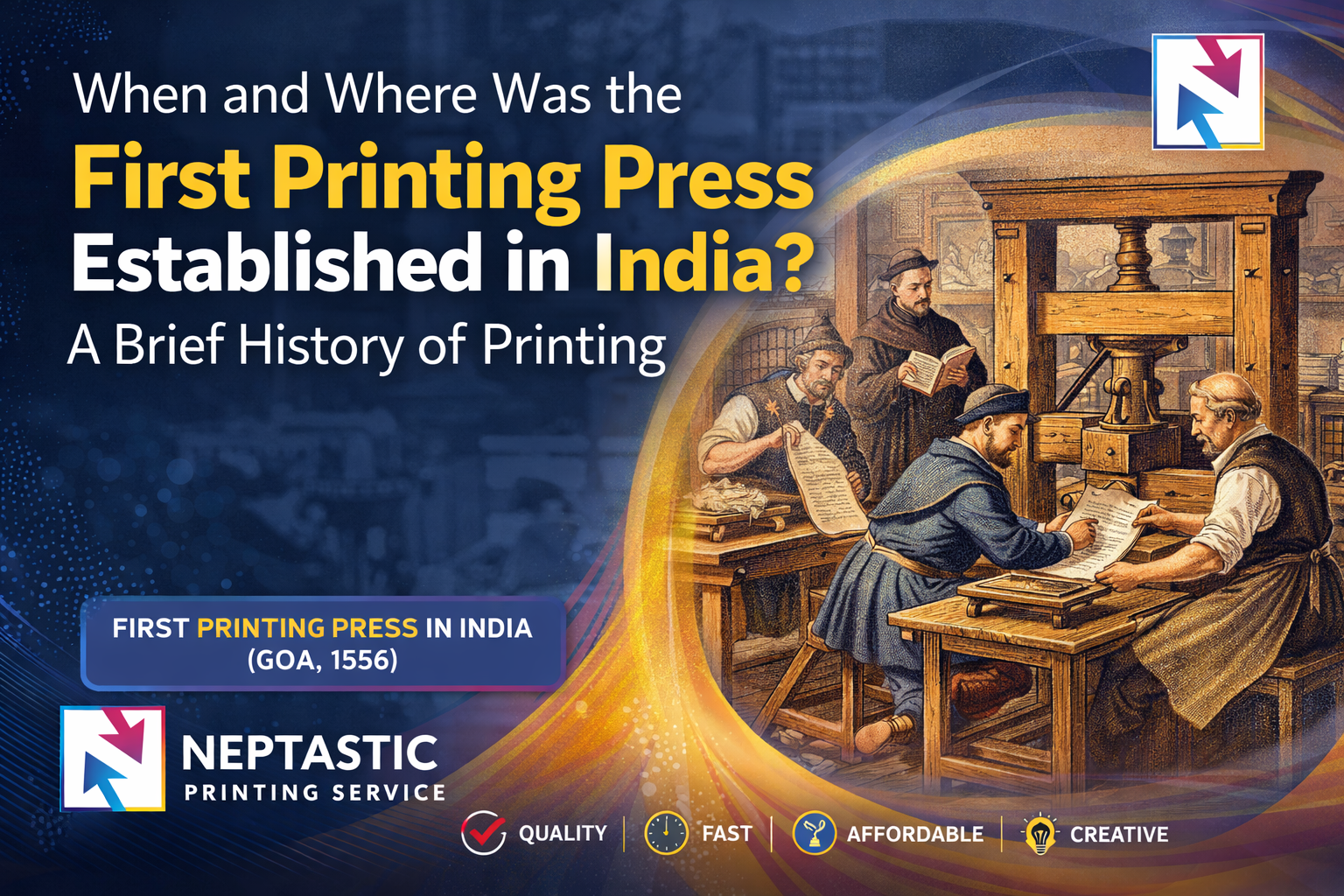
The first printing press in India was established in Goa in 1556 by Portuguese missionaries. Discover how printing technology evolved from early presses to modern digital printing.
Introduction: The Beginning of Printing in India
Printing has played a crucial role in spreading knowledge, education, and communication throughout history. Today, printing technology supports industries such as education, publishing, advertising, and business marketing. However, the journey of printing in India began centuries ago with the introduction of the first printing press.
Understanding the history of printing helps us appreciate how modern printing technologies evolved. From early manual presses to today’s digital and large-format printing services, the industry has transformed dramatically.
When Was the First Printing Press Established in India?
The first printing press in India was established in the year 1556. This important milestone marked the beginning of printing technology in the Indian subcontinent and played a major role in the spread of books, education, and religious texts.
Before the introduction of printing presses, all books and documents were written by hand, which made them expensive and difficult to distribute widely.
The arrival of the printing press allowed information to be produced faster and shared with more people.
Where Was the First Printing Press Established in India?
The first printing press in India was set up in Goa in 1556 by Portuguese missionaries, particularly the Jesuit missionaries who were involved in educational and religious activities.
Goa was under Portuguese rule during that period, and missionaries wanted to use printing technology to publish religious texts, educational materials, and literature.
This printing press was originally brought from Portugal and installed at St. Paul's College in Goa, which was one of the major educational institutions of that time.
Purpose of the First Printing Press in India
The primary goal of the first printing press was to produce Christian religious texts and educational books.
Missionaries used the press to print materials in different languages to spread religious teachings and provide educational resources.
Some of the early publications included:
- Religious books
- Catechisms
- Educational texts
- Language learning materials
These publications played an important role in spreading literacy and knowledge.
Early Printed Books in India
One of the earliest known printed works in India was religious literature produced by Jesuit missionaries. These early books were mainly printed in Latin and Portuguese, but later printing expanded into local Indian languages.
Over time, printing presses began producing materials in languages such as:
- Konkani
- Tamil
- Malayalam
- Bengali
This expansion helped bring printed knowledge to different regions of India.
Growth of Printing Technology in India
After the first printing press was established in Goa, printing technology gradually spread across India.
By the 18th and 19th centuries, printing presses were set up in major cities such as:
- Kolkata
- Mumbai
- Chennai
- Serampore
These presses printed newspapers, books, educational materials, and government publications.
Printing technology played a significant role in:
- spreading education
- promoting literature
- supporting freedom movements
- publishing newspapers and journals
Evolution from Traditional Press to Modern Printing
Over the centuries, printing technology has evolved significantly. Early manual printing presses were slow and required physical labor to operate.
Today, modern printing technologies include:
Digital Printing
Digital printing allows businesses to print materials directly from digital files, making it faster and more flexible.
Offset Printing
Offset printing is widely used for large-scale printing such as newspapers and magazines.
Large Format Printing
Large-format printing is commonly used for banners, hoardings, and advertising materials.
3D Printing
Modern printing technology has even expanded into 3D printing, which allows the creation of physical objects using digital designs.
These innovations have transformed printing into a major industry supporting businesses worldwide.
Importance of Printing for Businesses Today
In modern times, printing plays a vital role in business marketing and branding. Businesses use printing for:
- banners and posters
- visiting cards
- brochures and flyers
- product packaging
- promotional materials
High-quality printing helps businesses attract customers and create a professional image.
With growing commercial areas like Greater Noida West and Noida Extension, businesses rely on professional printing services to promote their products and services effectively.
Companies like Neptastic Printing Service help local businesses create impactful printed materials that support marketing and brand visibility.